Thank you for visiting nature.com. You are using a browser version with limited support for CSS. To obtain
the best experience, we recommend you use a more up to date browser (or turn off compatibility mode in
Internet Explorer). In the meantime, to ensure continued support, we are displaying the site without styles
and JavaScript.
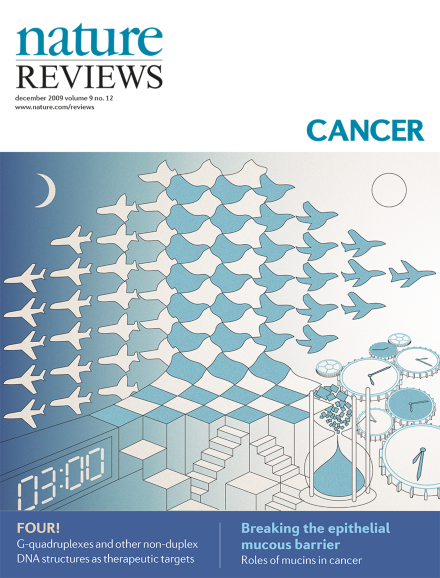
Transcription-induced DNA supercoiling has dynamic effects on theMYCpromoter element: it converts duplex DNA to non-duplex DNA structures. These non-duplex DNA structures regulate transcription and are amenable to small-molecule targeting. Does this represent another opportunity for the treatment of tumours?
The p53 pathway is deregulated in almost all tumours making it a prime target for new cancer drug development. This Review discusses the new approaches to drug discovery that are currently being used to target the p53 pathway and the progress made with the drugs that have been developed so far.
The mucin family of transmembrane and secreted glycoproteins form a barrier that protects the epithelium. Mucins affect epithelial polarity, inflammation, and cell growth and survival signalling; all of these functions could have roles in tumour formation and progression. This Review highlights the functions of mucins in cancer and discusses how these proteins are being targeted therapeutically.
Evidence indicates that the disruption of the circadian clock might be directly linked to cancer. As described here, alterations in clock function could lead to aberrant cellular proliferation, DNA damage responses and altered metabolism.
Recent evidence suggests that caspase 2 may have multiple roles in the response to DNA damage, cell cycle regulation and tumour suppression. These findings are unexpected and have important implications for our understanding of tumorigenesis and the treatment of cancer.