Table of contents


Top

Focus

Focus on drug discovery

Top

In This Issue

Focus on drug discovery

In This Issue pv

doi:10.1038/nchembio1206-v


Top

Editorial

Focus on drug discovery

Frontiers in drug discovery p645

doi:10.1038/nchembio1206-645

Integrating chemistry and biology in the search for the next generation of therapeutics.


Top

Commentaries

Focus on drug discovery

Smart drug discovery leveraging innovative technologies and predictive knowledge pp646 - 648

Tomi K Sawyer

doi:10.1038/nchembio1206-646

By building on the successes of the past and leveraging both innovative technologies and predictive knowledge, scientists can develop smarter ways to create a molecular armamentarium of chemical and biological medicines.


Focus on drug discovery

Drug discovery through industry-academic partnerships pp649 - 653

Nathanael S Gray

doi:10.1038/nchembio1206-649

Translational research in academia is extending beyond the traditional involvement in clinical trials to the early phases of the drug discovery process. Examples of successful academic-industrial partnerships illustrate the ways in which they can enable the discovery of new medicines.


Top

Elements

Focus on drug discovery

Stuart Levy p655

Joanne Kotz

doi:10.1038/nchembio1206-655

Seeking to maintain a supply of effective antibiotics, Stuart Levy combines research in microbiology and antibiotic drug discovery with a strong commitment to public communication.


Focus on drug discovery

Marlene Haffner p657

Catherine Goodman

doi:10.1038/nchembio1206-657

As head of the Office of Orphan Products Development, Marlene Haffner offers a perspective on the immense influence the Orphan Drug Act has had in promoting research on and awareness of rare diseases.


Top

News and Views

Puzzling through fragment-based drug design pp658 - 659

Philip J Hajduk

doi:10.1038/nchembio1206-658

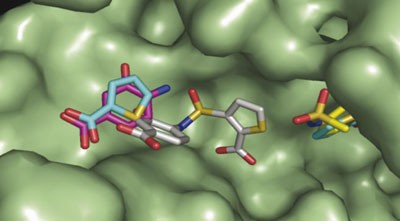
Fragment-based drug design capitalizes on the modular binding of low-molecular-weight, low-affinity ligands. However, the deconstruction of lead-like inhibitors into putative fragments reveals the surprising complexity of dealing with low-affinity leads, thereby challenging oversimplification of these leads and highlighting the richness of their chemical diversity and molecular recognition.

See also: Letter by Babaoglu & Shoichet


A sweet success for substrate engineering pp659 - 660

Byron R Griffith & Jon S Thorson

doi:10.1038/nchembio1206-659

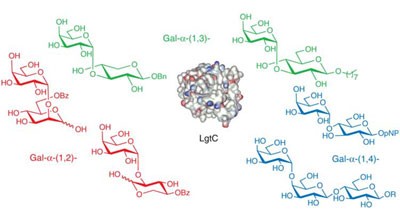
Chemically synthesizing complex oligosaccharides remains a significant challenge. Through the addition of hydrophobic appendages to 'unnatural' substrates, some oligosaccharide-forming glycosyltransferases can direct the formation of distinct sugar linkages while maintaining stereoselectivity.

See also: Letter by Lairson et al.


Combinatorial biosynthesis in symbiotic bacteria pp661 - 662

Jörn Piel

doi:10.1038/nchembio1206-661

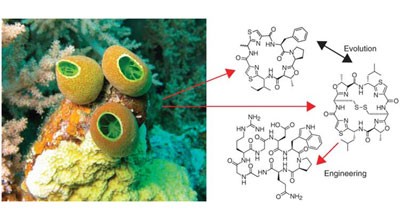
Ascidians obtain diverse libraries of cytotoxic compounds by maintaining cyanobacterial symbionts that have combinatorial variants of a natural-product pathway. The biosynthetic flexibility of this route can be used to genetically engineer new substances.

See also: Letter by Donia et al.


The connectivity map pp663 - 664

Stephen W Michnick

doi:10.1038/nchembio1206-663

The sheer quantity and complexity of gene expression data can provide extraordinarily accurate descriptions of differences between states of cells, tissues and whole organisms. A compendium of genomic signatures that attempts to describe all biological states has the potential to reveal hidden connections among drugs, genes and diseases.


Research Highlights p665

doi:10.1038/nchembio1206-665


Top

Perspectives


Focus on drug discovery

Production of isoprenoid pharmaceuticals by engineered microbes pp674 - 681

Michelle C Y Chang & Jay D Keasling

doi:10.1038/nchembio836


Focus on drug discovery

Synthetic therapeutic antibodies pp682 - 688

Sachdev S Sidhu & Frederic A Fellouse

doi:10.1038/nchembio843


Top

Reviews

Focus on drug discovery

New approaches to molecular cancer therapeutics pp689 - 700

Ian Collins & Paul Workman

doi:10.1038/nchembio840


Focus on drug discovery

RNAi therapeutics: a potential new class of pharmaceutical drugs pp711 - 719

David Bumcrot, Muthiah Manoharan, Victor Koteliansky & Dinah W Y Sah

doi:10.1038/nchembio839


Top

Letters


Natural combinatorial peptide libraries in cyanobacterial symbionts of marine ascidians pp729 - 735

Mohamed S Donia, Brian J Hathaway, Sebastian Sudek, Margo G Haygood, M J Rosovitz, Jacques Ravel & Eric W Schmidt

doi:10.1038/nchembio829

no alt info

See also: News and Views by Piel


Top

Extra navigation

Subscribe to Nature Chemical Biology

Subscribe

Open Innovation Challenges