Thank you for visiting nature.com. You are using a browser version with limited support for CSS. To obtain
the best experience, we recommend you use a more up to date browser (or turn off compatibility mode in
Internet Explorer). In the meantime, to ensure continued support, we are displaying the site without styles
and JavaScript.
In this Tools of the Trade article, Zülal Cibir and Matthias Gunzer introduce their multi-lens array microscope called ComplexEye that allows high-throughput analysis of cell migration.
Re-exposure to a previously encountered antigen leads to robust antibody responses and the formation of ‘recall’ germinal centres. A preprint by Schiepers et al. shows that antibody feedback in these germinal centres ensures the maturation of naive B cells that can target escape epitopes.
A preprint by Zhou et al. shows that the clinical efficacy of immune checkpoint blockade in patients with cancer does not depend on the presence of tumour-draining lymph nodes, as their role is taken over by more distant lymph nodes.
This Review discusses how the study of novel mouse models of human ADAR1 deficiency has led to the identification of the innate immune receptors recognizing endogenous immunostimulatory double-stranded RNA and their respective downstream signalling pathways that induce autoinflammatory pathology.
The protective effect of vaccines is often poorest in low-income countries. Here, the authors explore the immunological factors that may explain the geographical variation in vaccine responsiveness and the ways in which they might be modulated to ensure effective vaccination in regions where it is needed most.
Epidemiological studies and mouse models suggest that stress can affect the evolution, dissemination and outcome of malignancies. In this Review, Ma and Kroemer present insights into the complex neuro-immune interactions that link stress to cancer, with a focus on stress-associated immunomodulatory molecules, and discuss their implications for cancer therapy.
Epidemiological evidence indicates that physical exercise can lower cancer incidence and mortality. This Perspective discusses the importance of muscular activity for maintaining a healthy immune system and the potential mechanisms by which exercise affects anticancer immunity.
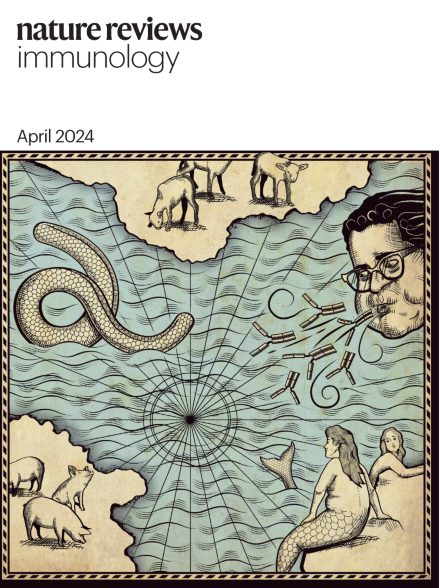
In this Perspective, the authors consider the distinct contributions made by T helper 2 cells and group 2 innate lymphoid cells during the course of a helminth infection. Although anti-helminth drugs are effective, reinfection is common and there are currently no available vaccines — a better understanding of T helper 2 cell and group 2 innate lymphoid cell interplay could lead to new anti-helminth strategies.