Table of contents


Top

Editorial

Back to basics p821

doi:10.1038/nm0809-821

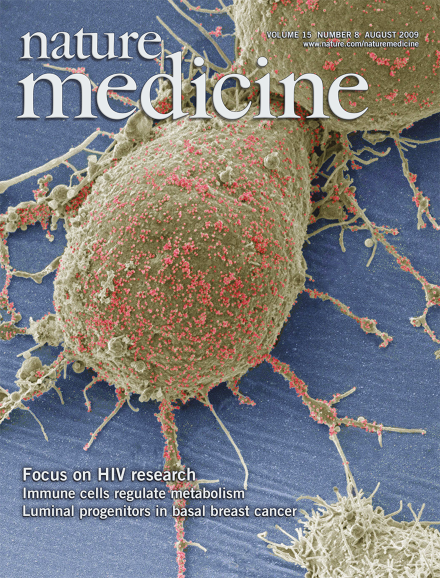
Basic HIV research has, over the past two decades, brought about enormous advances that have transformed a fatal disease into a manageable illness. HIV vaccine research has suffered more setbacks than successes, but a renewed focus on fundamental questions about HIV pathogenesis will provide new glimmers of hope.


Top

News

Trauma trials kick off, putting patient consent rules in focus p823

Stu Hutson

doi:10.1038/nm0809-823


Dismissal of bioethics council leads to speculation about its future p824

Vicki Brower

doi:10.1038/nm0809-824a


Sequencing push brings new UK genome analysis center p824

Lucas Laursen

doi:10.1038/nm0809-824b


Cancer meeting in Germany highlights need for national registry p825

Karen Dente

doi:10.1038/nm0809-825


Gaps in genetic antidiscrimination law spur state action p826

Meredith Wadman

doi:10.1038/nm0809-826a


Production of radioactive isotopes proves problematic p826

Simon Grose

doi:10.1038/nm0809-826b


Patients see proposed FDA opioid rules as painfully restrictive p827

Vicki Brower

doi:10.1038/nm0809-827a


NIH stem cell rules expand funding p827

Stu Hutson

doi:10.1038/nm0809-827b


From cells, secrets of the secretome leak out p828

Mike May

doi:10.1038/nm0809-828


Focus on HIV/AIDS Research

Experts applaud policy overhaul of US AIDS relief program p829

Virginia Hughes

doi:10.1038/nm0809-829a


Focus on HIV/AIDS Research

Rectal microbicides in development p829

Cassandra Willyard

doi:10.1038/nm0809-829b


Focus on HIV/AIDS Research

AIDS advocates and doctors brace for impact of lost funding p830

Melinda Wenner

doi:10.1038/nm0809-830a


Focus on HIV/AIDS Research

HIV gender clues emerge p830

Cassandra Willyard

doi:10.1038/nm0809-830b


Focus on HIV/AIDS Research

Expanded HIV testing planned, but some remain less than positive p831

Alisa Opar

doi:10.1038/nm0809-831a


Focus on HIV/AIDS Research

US moves on controversial travel ban p831

Melinda Wenner

doi:10.1038/nm0809-831b


News in brief pp832 - 833

doi:10.1038/nm0809-832


Straight talk with...James Ironside pp834 - 835

doi:10.1038/nm0809-834

James Ironside, professor of clinical neuropathology at the University of Edinburgh, was recently appointed as the director of the new UK Brain Banks Network. Jon Evans recently caught up with Ironside to discuss his new leadership position and how the brain network will benefit neuroscience research.


A tough controversy to stomach pp836 - 839

Cassandra Willyard

doi:10.1038/nm0809-836

The bacterium that causes stomach ulcers and deadly gastric cancer, Helicobacter pylori, is disappearing in many developed countries. Many physicians see this as cause for celebration. But at least one researcher thinks the bacterium is more than just a pathogen. Cassandra Willyard investigates whether H. pylori may be preventing diseases as well as causing them.


Top

Book Review

The case for medical marijuana p840

Daniele Piomelli reviews Dying to Get High: Marijuana as Medicine by Wendy Chapkis & Richard Webb

doi:10.1038/nm0809-840


Top

News and Views

Focus on HIV/AIDS Research

Blocking and tackling HIV pp841 - 842

Nancy L. Haigwood & Vanessa M. Hirsch

doi:10.1038/nm0809-841

Two studies suggest that low levels of antibodies, when present continuously, effectively limit or prevent HIV infection (pages 951–954 and 901–906). The findings provide hope for the development of a vaccine.

See also: Article by Johnson et al. | Letter by Hessell et al.


Mammary development meets cancer genomics pp842 - 844

Aleix Prat & Charles M. Perou

doi:10.1038/nm0809-842

Mammary epithelial cell development is thought to progress from undifferentiated stem cells into at least two differentiated cell types. A new study has now characterized some of these distinct developmental stages and links them to tumor subtypes previously defined by gene expression profiling (pages 907–913).

See also: Article by Lim et al.


T time in the brain pp844 - 846

Eng H Lo

doi:10.1038/nm0809-844

Inflammation in neural tissue has long been suspected to have a role in stroke. A new study in mouse models of focal cerebral ischemia suggest that a stereotyped sequence of T cell infiltration and activation may underlie the progression of brain injury that can last up to days after stroke onset (pages 946–950).

See also: Letter by Shichita et al.


T-ing up inflammation in fat pp846 - 847

Carey N. Lumeng, Ivan Maillard & Alan R. Saltiel

doi:10.1038/nm0809-846

Obesity generates a proinflammatory environment in adipose tissue, but the factors that initiate this inflammatory cascade have been unclear. Three studies now show that alterations in the composition of adipose tissue T cells occur early in obesity and shape the relationship between immunity and metabolism (pages 914–920, 921–929 and 930–939).

See also: Article by Nishimura et al. | Article by Winer et al. | Article by Feuerer et al.


Top

Community Corner

Focus on HIV/AIDS Research

An earlier start for HIV therapy p848

doi:10.1038/nm0809-848


Top

Between Bedside and Bench

Genetics and neuropsychiatric disorders: Treatment during adulthood pp849 - 850

Dan Ehninger & Alcino J Silva

doi:10.1038/nm0809-849

Genetic approaches in animal models have recently led to new ways of thinking about inherited neuropsychiatric disorders. Many such disorders were thought to originate during early development, but newer findings have suggested that processes in the adult nervous system also contribute. Dan Ehninger and Alcino J. Silva outline how such events in the adult may be amenable to therapy, including some approaches in clinical trials. In Bedside to Bench, Petrus de Vries questions the utility of genome-wide association studies for autism spectrum disorders and other neuropsychiatric conditions.


Genetics and neuropsychiatric disorders: Genome-wide, yet narrow pp850 - 851

Petrus J de Vries

doi:10.1038/nm0809-850


Top

Research Highlights

Research Highlights pp852 - 853

doi:10.1038/nm0809-852


Top

Analysis

Focus on HIV/AIDS Research

Roadblocks in HIV research: five questions pp855 - 859

Clare Thomas

doi:10.1038/nm0809-855

What are the most important questions that the HIV field needs to answer to make progress? Nature Medicine asked this question to a group of HIV researchers to identify some of the key roadblocks in HIV research.


Top

Perspectives

Focus on HIV/AIDS Research

Toward an AIDS vaccine: lessons from natural simian immunodeficiency virus infections of African nonhuman primate hosts pp861 - 865

Donald L Sodora, Jonathan S Allan, Cristian Apetrei, Jason M Brenchley, Daniel C Douek, James G Else, Jacob D Estes, Beatrice H Hahn, Vanessa M Hirsch, Amitinder Kaur, Frank Kirchhoff, Michaela Muller-Trutwin, Ivona Pandrea, Jörn E Schmitz & Guido Silvestri

doi:10.1038/nm.2013


Focus on HIV/AIDS Research

Neutralizing antibodies generated during natural HIV-1 infection: good news for an HIV-1 vaccine? pp866 - 870

Leonidas Stamatatos, Lynn Morris, Dennis R Burton & John R Mascola

doi:10.1038/nm.1949


Top

Brief Communications

Focus on HIV/AIDS Research

A new human immunodeficiency virus derived from gorillas pp871 - 872

Jean-Christophe Plantier, Marie Leoz, Jonathan E Dickerson, Fabienne De Oliveira, François Cordonnier, Véronique Lemée, Florence Damond, David L Robertson & François Simon

doi:10.1038/nm.2016

There are three established HIV-1 lineages, M, N and O, which arose after cross-species transmission of simian immunodeficiency virus circulating in chimpanzees. An unusual variant of HIV-1 has now been identified that seems to be the prototype of a new lineage derived from gorillas.


Focus on HIV/AIDS Research

Adenovirus-specific immunity after immunization with an Ad5 HIV-1 vaccine candidate in humans pp873 - 875

Kara L O'Brien, Jinyan Liu, Sharon L King, Ying-Hua Sun, Joern E Schmitz, Michelle A Lifton, Natalie A Hutnick, Michael R Betts, Sheri A Dubey, Jaap Goudsmit, John W Shiver, Michael N Robertson, Danilo R Casimiro & Dan H Barouch

doi:10.1038/nm.1991

The phase 2b trial of Merck's recombinant adenovirus type 5–based HIV-1 vaccine was halted as the vaccine seemed to have increased HIV-1 acquisition in vaccine recipients who had preexisting immunity to the adenovirus vector. One theory to explain these results is that the preexisting antibody response to the vector may have been a surrogate for increased vector-specific CD4+ T cells, which would have been amplified after vaccination and may have served as increased target cells during subsequent HIV-1 exposure. Daniel Barouch and his colleagues and Michael Betts and his colleagues now challenge this view.


Focus on HIV/AIDS Research

Baseline Ad5 serostatus does not predict Ad5 HIV vaccine–induced expansion of adenovirus-specific CD4+ T cells pp876 - 878

Natalie A Hutnick, Diane G Carnathan, Sheri A Dubey, Kara S Cox, Lisa Kierstead, Sarah J Ratcliffe, Michael N Robertson, Danilo R Casimiro, Hildegund C J Ertl & Michael R Betts

doi:10.1038/nm.1989

The phase 2b trial of Merck's recombinant adenovirus type 5-based HIV-1 vaccine was halted as the vaccine seemed to have increased HIV-1 acquisition in vaccine recipients who had preexisting immunity to the adenovirus vector. One theory to explain these results is that the preexisting antibody response to the vector may have been a surrogate for increased vector-specific CD4+ T cells, which would have been amplified after vaccination and may have served as increased target cells during subsequent HIV-1 exposure. Daniel Barouch and his colleagues and Michael Betts and his colleagues now challenge this view.


Top

Articles

Focus on HIV/AIDS Research

CD4 downregulation by memory CD4+ T cells in vivo renders African green monkeys resistant to progressive SIVagm infection pp879 - 885

Coreen M Beaumier, Levelle D Harris, Simoy Goldstein, Nichole R Klatt, Sonya Whitted, John McGinty, Cristian Apetrei, Ivona Pandrea, Vanessa M Hirsch & Jason M Brenchley

doi:10.1038/nm.1970

Natural hosts of simian immunodeficiency virus (SIV)—such as African green monkeys—have evolved to tolerate SIV infection without developing immune deficiency. Jason Brenchley and his colleagues provide a mechanism. They show that CD4+ T cells from these animals downregulate the CD4 receptor upon entering the memory pool. Immune functions normally attributed to CD4+ T cells are preserved, but the cells become resistant to SIV infection.


Focus on HIV/AIDS Research

Persistence of HIV-1 receptor–positive cells after HSV-2 reactivation is a potential mechanism for increased HIV-1 acquisition pp886 - 892

Jia Zhu, Florian Hladik, Amanda Woodward, Alexis Klock, Tao Peng, Christine Johnston, Michael Remington, Amalia Magaret, David M Koelle, Anna Wald & Lawrence Corey

doi:10.1038/nm.2006

Infection with HSV-2 increases the likelihood of HIV acquisition, but suppression of HSV-2 reactivation with antiviral drugs does not seem to reduce the acquisition of HIV. Laurence Corey and colleagues provide a potential mechanism underlying this observation, showing that even after acyclovir treatment for the HSV-2 infection, many inflammatory and immune cells possessing the receptors required for HIV infection persist in the mucosa, making the initial 'spark' of infection more likely.


Focus on HIV/AIDS Research

HIV reservoir size and persistence are driven by T cell survival and homeostatic proliferation pp893 - 900

Nicolas Chomont, Mohamed El-Far, Petronela Ancuta, Lydie Trautmann, Francesco A Procopio, Bader Yassine-Diab, Geneviève Boucher, Mohamed-Rachid Boulassel, Georges Ghattas, Jason M Brenchley, Timothy W Schacker, Brenna J Hill, Daniel C Douek, Jean-Pierre Routy, Elias K Haddad & Rafick-Pierre Sékaly

doi:10.1038/nm.1972

Highly active antiretroviral therapy is unable to eliminate HIV infection, because the virus persists in latently infected CD4+ T cells—a so-called virus reservoir. Rafick-Pierre Sekaly and his colleagues have shown that central memory CD4+ T cells and transitional memory CD4+ T cells are the main cellular reservoirs for HIV, and they suggest a mechanism that ensures the stability of this reservoir of virus.


Focus on HIV/AIDS Research

Vector-mediated gene transfer engenders long-lived neutralizing activity and protection against SIV infection in monkeys pp901 - 906

Philip R Johnson, Bruce C Schnepp, Jianchao Zhang, Mary J Connell, Sean M Greene, Eloisa Yuste, Ronald C Desrosiers & K Reed Clark

doi:10.1038/nm.1967

Antibodies capable of neutralizing a wide array of HIV isolates are rarely elicited by the adaptive immune response during HIV infection, and it is not known how to elicit such protective antibodies by vaccination. Philip Johnson and his colleagues have circumvented this hurdle through gene transfer technology. They show that it is possible to protect monkeys from SIV infection by administering intramuscular injections of adeno-associated virus vectors that express broadly neutralizing antibodies that can access the circulation (841–842pages 951–954).

See also: News and Views by Haigwood & Hirsch | Letter by Hessell et al.


Aberrant luminal progenitors as the candidate target population for basal tumor development in BRCA1 mutation carriers pp907 - 913

Elgene Lim, François Vaillant, Di Wu, Natasha C Forrest, Bhupinder Pal, Adam H Hart, Marie-Liesse Asselin-Labat, David E Gyorki, Teresa Ward, Audrey Partanen, Frank Feleppa, Lily I Huschtscha, Heather J Thorne, kConFab, Stephen B Fox, Max Yan, Juliet D French, Melissa A Brown, Gordon K Smyth, Jane E Visvader & Geoffrey J Lindeman

doi:10.1038/nm.2000

Contrary to the belief that basal-like breast cancers develop from mammary stem cells in BRCA1 mutation carriers, an aberrant luminal progenitor population might be the target for transformation in basal tumors in these individuals (pages 842–844).

See also: News and Views by Prat & Perou


CD8+ effector T cells contribute to macrophage recruitment and adipose tissue inflammation in obesity pp914 - 920

Satoshi Nishimura, Ichiro Manabe, Mika Nagasaki, Koji Eto, Hiroshi Yamashita, Mitsuru Ohsugi, Makoto Otsu, Kazuo Hara, Kohjiro Ueki, Seiryo Sugiura, Kotaro Yoshimura, Takashi Kadowaki & Ryozo Nagai

doi:10.1038/nm.1964

In these new reports, three different research groups independently find that various T cell populations are crucial mediators of obesity-induced metabolic dysfunction. They also show that pharmacological approaches that target these T cells are beneficial, thus opening the door to possible new therapeutic approaches to treating obesity-related diseases such as diabetes (pages 846–847, 921–929 and 930–939).

See also: News and Views by Lumeng et al. | Article by Winer et al. | Article by Feuerer et al.


Normalization of obesity-associated insulin resistance through immunotherapy pp921 - 929

Shawn Winer, Yin Chan, Geoffrey Paltser, Dorothy Truong, Hubert Tsui, Jasmine Bahrami, Ruslan Dorfman, Yongqian Wang, Julian Zielenski, Fabrizio Mastronardi, Yuko Maezawa, Daniel J Drucker, Edgar Engleman, Daniel Winer & H.-Michael Dosch

doi:10.1038/nm.2001

In these new reports, three different research groups independently find that various T cell populations are crucial mediators of obesity-induced metabolic dysfunction. They also show that pharmacological approaches that target these T cells are beneficial, thus opening the door to possible new therapeutic approaches to treating obesity-related diseases such as diabetes (pages 846–847, 914–920 and 930–939).

See also: News and Views by Lumeng et al. | Article by Nishimura et al. | Article by Feuerer et al.


Lean, but not obese, fat is enriched for a unique population of regulatory T cells that affect metabolic parameters pp930 - 939

Markus Feuerer, Laura Herrero, Daniela Cipolletta, Afia Naaz, Jamie Wong, Ali Nayer, Jongsoon Lee, Allison B Goldfine, Christophe Benoist, Steven Shoelson & Diane Mathis

doi:10.1038/nm.2002

In these new reports, three different research groups independently find that various T cell populations are crucial mediators of obesity-induced metabolic dysfunction. They also show that pharmacological approaches that target these T cells are beneficial, thus opening the door to possible new therapeutic approaches to treating obesity-related diseases such as diabetes (pages 846–847, 914–920 and 921–929).

See also: News and Views by Lumeng et al. | Article by Nishimura et al. | Article by Winer et al.


Top

Letters

Genetic deficiency and pharmacological stabilization of mast cells reduce diet-induced obesity and diabetes in mice pp940 - 945

Jian Liu, Adeline Divoux, Jiusong Sun, Jie Zhang, Karine Clément, Jonathan N Glickman, Galina K Sukhova, Paul J Wolters, Juan Du, Cem Z Gorgun, Alessandro Doria, Peter Libby, Richard S Blumberg, Barbara B Kahn, Gökhan S Hotamisligil & Guo-Ping Shi

doi:10.1038/nm.1994

Mast cells, which are involved in inflammation and wound healing, have now been shown to have a role in obesity and diabetes in a new report by Guo-Ping Shi and his colleagues. They go on to show that pharmacological inhibition of mast cell function is sufficient to reduce these metabolic disturbances in mice, suggesting a new therapeutic avenue in the clinic for these disorders.


Pivotal role of cerebral interleukin-17–producing bold gammadeltaT cells in the delayed phase of ischemic brain injury pp946 - 950

Takashi Shichita, Yuki Sugiyama, Hiroaki Ooboshi, Hiroshi Sugimori, Ryusuke Nakagawa, Ichiro Takada, Toru Iwaki, Yasunori Okada, Mitsuo Iida, Daniel J Cua, Yoichiro Iwakura & Akihiko Yoshimura

doi:10.1038/nm.1999

Inflammatory cells invade the brain after stroke, but their role in disease has been unclear. Now, Akihiko Yoshimura and colleagues report that a particular population of T cells that express the inflammatory cytokine IL-17 plays a key role in stroke progression: depletion of these cells—even as late as 1 day after stroke—can alleviate brain injury in mice pages 844–846).

See also: News and Views by Lo


Focus on HIV/AIDS Research

Effective, low-titer antibody protection against low-dose repeated mucosal SHIV challenge in macaques pp951 - 954

Ann J Hessell, Pascal Poignard, Meredith Hunter, Lars Hangartner, David M Tehrani, Wim K Bleeker, Paul W H I Parren, Preston A Marx & Dennis R Burton

doi:10.1038/nm.1974

Studies in macaques have shown that neutralizing antibodies can offer robust protection from infection with a simian counterpart of HIV, yet these studies have also suggested that high concentrations of antibodies are required for efficient protection. Unfortunately, it's not generally thought to be feasible to elicit such high neutralizing antibody titers by vaccination. Dennis Burton and his colleagues now show that lower concentrations of antibodies can offer protection to macaques if a repeated low-dose challenge model is used—a model that may better recapitulate the acquisition of infection in humans.

See also: News and Views by Haigwood & Hirsch | Article by Johnson et al.


Focus on HIV/AIDS Research

Sex differences in the Toll-like receptor–mediated response of plasmacytoid dendritic cells to HIV-1 pp955 - 959

Angela Meier, J Judy Chang, Ellen S Chan, Richard B Pollard, Harlyn K Sidhu, Smita Kulkarni, Tom Fang Wen, Robert J Lindsay, Liliana Orellana, Donna Mildvan, Suzane Bazner, Hendrik Streeck, Galit Alter, Jeffrey D Lifson, Mary Carrington, Ronald J Bosch, Gregory K Robbins & Marcus Altfeld

doi:10.1038/nm.2004

Women seem to progress to AIDS more rapidly than men after HIV-1 infection. Marcus Altfeld and his colleagues show that, after adjusting for viral load, HIV-1–infected women have higher levels of immune activation, and the authors provide a potential mechanism to account for this difference between the sexes.


Top

Technical Reports

Imaging transforming growth factor-beta signaling dynamics and therapeutic response in breast cancer bone metastasis pp960 - 966

Manav Korpal, Jun Yan, Xin Lu, Shuwa Xu, Dorothy A Lerit & Yibin Kang

doi:10.1038/nm.1943

Although the TGF-bold beta signaling pathway has been implicated in breast cancer metastasis, studies are hampered by a lack of animal models for in vivo analysis of metastasis signaling pathways. Here a noninvasive xenograft model is described that uses a dual bioluminescence reporter system to study TGF-bold beta signaling in bone metastasis. Disruption of TGF-bold beta signaling in early—not late—stage metastasis is shown to markedly reduce bone metastasis burden.


Noninvasive optical imaging of apoptosis by caspase-targeted activity-based probes pp967 - 973

Laura E Edgington, Alicia B Berger, Galia Blum, Victoria E Albrow, Margot G Paulick, Neil Lineberry & Matthew Bogyo

doi:10.1038/nm.1938

Caspases are intracellular proteases and key initiators and effectors of apoptosis. Here the authors describe fluorescently labeled activity-based probes that allow the noninvasive in vivo monitoring of the kinetics of caspase activity. Approaches to optimize the probes to enhance their specificity and increase uptake into apoptotic cells are outlined, and their use in tracking the early stages of apoptosis in two mouse models (dexamethasone and the monoclonal antibody Apomab) is demonstrated.


Top

Extra navigation

Subscribe to Nature Medicine

Subscribe

Open Innovation Challenges

naturejobs

ADVERTISEMENT