Table of contents


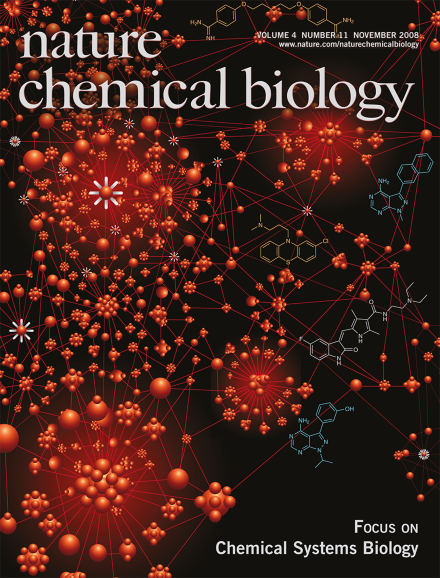
cover image

Focus on Chemical Systems Biology

Top

In This Issue

Focus on chemical systems biology

In this issue pv

doi:10.1038/nchembio1108-v


Top

Editorial

Focus on chemical systems biology

Networking chemical biology p633

doi:10.1038/nchembio1108-633

Closer interactions between chemical biology and systems biology have the potential to provide a more integrated understanding of how biology functions.


Top

Commentaries

Focus on chemical systems biology

Chemical biology and the limits of reductionism pp635 - 638

Randall T Peterson

doi:10.1038/nchembio1108-635

Chemical biology and systems biology have grown and evolved in parallel during the past decade, but the mindsets of the two disciplines remain quite different. As the inevitable intersections between the disciplines become more frequent, chemical biology has an opportunity to assimilate the most powerful ideas from systems biology. Can the integrationist mindset of systems biology liberate chemical biology from the compulsion to reduce everything to individual small molecule–target pairings?


Focus on chemical systems biology

Challenges for the 'chemical-systems' biologist pp639 - 642

Gabriel M Simon & Benjamin F Cravatt

doi:10.1038/nchembio1108-639

As the field of chemical biology matures, its practitioners are tackling ever more sophisticated biological problems. Chemical approaches, both synthetic and analytical, provide researchers with powerful new technologies to perturb, dissect and even reconstruct complex biological systems. Here we discuss the special challenges and opportunities confronted at the burgeoning interface of chemical and systems biology.


Focus on chemical systems biology

Reverse engineering intracellular biochemical networks pp643 - 647

Eli Zamir & Philippe I H Bastiaens

doi:10.1038/nchembio1108-643

Although much is known about the molecular components of cellular signaling pathways, very little is known about how these multicomponent biochemical machineries process complex extracellular signals to generate a consolidated cellular response. A newly developed theoretical approach for reverse engineering network structure—analyzing how perturbations propagate in a network—can be combined with chemical perturbations and quantitative detection approaches to reveal the causal connections within protein networks in cells. This information indicates the dynamic capabilities of a network and thereby its potential function.


Top

News and Views

Killing two kinase families with one stone pp648 - 649

Benoit Bilanges, Neil Torbett & Bart Vanhaesebroeck

doi:10.1038/nchembio1108-648

Multitargeted protein kinase inhibitors have shown great promise in cancer therapy, but the selectivity profiles of these compounds have largely relied on serendipity or 'off-target' activities rather than rational drug design. Purposefully designed compounds with activity against multiple target kinases bring us a step closer to personalized medicine.

See also: Article by Apsel et al.


To dislodge an enzyme from an ion channel, try steroids pp650 - 651

Susy C Kohout & Ehud Y Isacoff

doi:10.1038/nchembio1108-650

Voltage-gated K+ channels assemble into complexes with Kvbetas, a group of aldoketoreductases. The Kvbetas regulate channel gating and localization, and voltage-dependent changes in the channel regulate AKR activity. Pan and colleagues now propose a new type of modulation of this complex. Cortisone disrupts the complex and relieves channel inactivation—which should reduce neuronal excitability.

See also: Article by Pan et al.


Proteolytic needles in the cellular haystack pp651 - 652

Mari Enoksson & Guy S Salvesen

doi:10.1038/nchembio1108-651

The execution phase of cell death is driven by specific proteolytic signaling through cleavage of proteins by caspases. Within the mix of hundreds of newly identified caspase substrates lie the crucial proteolytic events whose sum defines the unique morphology known as apoptosis.


Community organizers and (bio)filmmaking pp653 - 654

Bruce Demple

doi:10.1038/nchembio1108-653

Bacteria produce and excrete toxic compounds classically categorized as waste products or chemical weapons. New work indicates a role for phenazines and SoxR, a transcription factor known for its role in defense against oxidative stress, in coordinating bacterial community growth.


An autocatalytic network for ribozyme self-construction pp654 - 655

Burckhard Seelig

doi:10.1038/nchembio1108-654

The emergence of a primordial RNA world would have required the formation of RNA polymers of sufficient length to possess catalytic activities, which are difficult to obtain by spontaneous polymerization. An analysis of an autocatalytic assembly pathway that can self-construct a functioning ribozyme from smaller oligonucleotide building blocks describes a potential route for RNA extension.


Research highlights p657

doi:10.1038/nchembio1108-657


Top

Perspective

Focus on chemical systems biology

Learning biological networks: from modules to dynamics pp658 - 664

Richard Bonneau

doi:10.1038/nchembio.122


Top

Reviews

Focus on chemical systems biology

Targeting and tinkering with interaction networks pp666 - 673

Robert B Russell & Patrick Aloy

doi:10.1038/nchembio.119


Focus on chemical systems biology

Combination chemical genetics pp674 - 681

Joseph Lehár, Brent R Stockwell, Guri Giaever & Corey Nislow

doi:10.1038/nchembio.120


Focus on chemical systems biology

Network pharmacology: the next paradigm in drug discovery pp682 - 690

Andrew L Hopkins

doi:10.1038/nchembio.118


Top

Articles

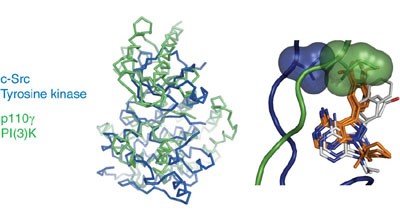
Targeted polypharmacology: discovery of dual inhibitors of tyrosine and phosphoinositide kinases pp691 - 699

Beth Apsel, Jimmy A Blair, Beatriz Gonzalez, Tamim M Nazif, Morri E Feldman, Brian Aizenstein, Randy Hoffman, Roger L Williams, Kevan M Shokat & Zachary A Knight

doi:10.1038/nchembio.117

no alt info

See also: News and Views by Bilanges et al.


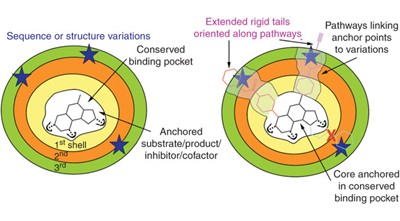
Anchored plasticity opens doors for selective inhibitor design in nitric oxide synthase pp700 - 707

Elsa D Garcin, Andrew S Arvai, Robin J Rosenfeld, Matt D Kroeger, Brian R Crane, Gunilla Andersson, Glen Andrews, Peter J Hamley, Philip R Mallinder, David J Nicholls, Stephen A St-Gallay, Alan C Tinker, Nigel P Gensmantel, Antonio Mete, David R Cheshire, Stephen Connolly, Dennis J Stuehr, Anders Åberg, Alan V Wallace, John A Tainer & Elizabeth D Getzoff

doi:10.1038/nchembio.115

no alt info


Top

Extra navigation

Subscribe to Nature Chemical Biology

Subscribe

Open Innovation Challenges

naturejobs