Table of contents


Top

In This Issue

In This Issue pv

doi:10.1038/nchembio0606-v


Top

Editorial

Our paper anniversary p283

doi:10.1038/nchembio0606-283


Top

Commentary

Making carbon-nitrogen bonds in biological and chemical synthesis pp284 - 287

Ryan Hili & Andrei K Yudin

doi:10.1038/nchembio0606-284

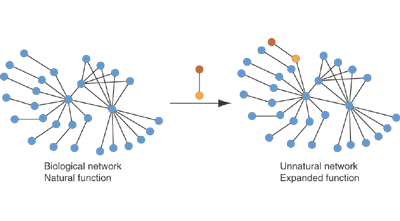
The function of many biologically active molecules requires the presence of carbon-nitrogen bonds in strategic positions. The biosynthetic pathways leading to such bonds can be bypassed through chemical synthesis to synthesize natural products more efficiently and also to generate the molecular diversity unavailable in nature.


Top

Meeting Report

A century at the chemistry-biology interface pp288 - 292

Jennifer J Kohler

doi:10.1038/nchembio0606-288

The field of chemical biology is now hitting its stride. Chemical biologists have developed essential tools that are being used to illuminate complex cellular events. The application of chemical principles to biological phenomena has revealed new opportunities for drug discovery. This report highlights recent progress and exciting new directions in chemical genetics and drug discovery.


Top

Elements

Jeremy Knowles p293

Joanne Kotz

doi:10.1038/nchembio0606-293

From research contributions in understanding the molecular details of enzyme catalysis to involvement in education and university administration, Jeremy Knowles offers a broad perspective on chemistry and chemical biology.


Top

News and Views

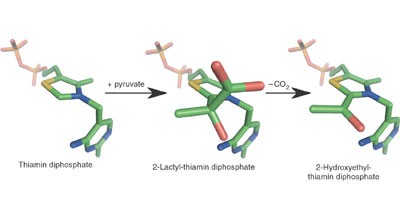
Snapshots of three intermediates at the active site of pyruvate oxidase pp294 - 295

Perry A Frey

doi:10.1038/nchembio0606-294

Identifying the structures of transient intermediates is an essential step in the elucidation of an enzymatic reaction mechanism. Cryocrystallography reveals the structures of three thiamine diphosphate derivatives as intermediates in the action of pyruvate oxidase.

See also: Letter by Wille et al.


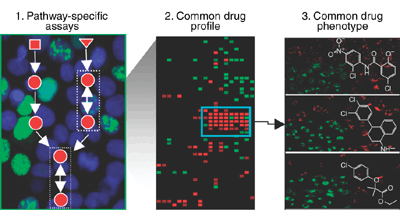
Signalomic signatures enlighten drug profiling pp295 - 296

Robert T Abraham

doi:10.1038/nchembio0606-295

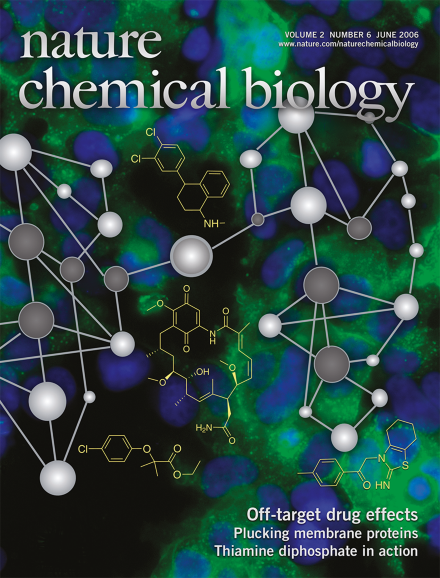
When introduced into living cells, drugs frequently evoke unanticipated responses that are due either to off-target effects or to previously unknown interactions between the intended target and other biochemical pathways. The development of a panel of high-resolution sentinel assays for signal-transduction cascades in human cells promises to enhance the power of chemical genetics and increase the efficiency of drug-discovery research.

See also: Article by MacDonald et al.


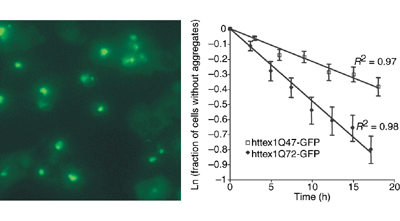
Nucleation of huntingtin aggregation in cells pp297 - 298

Ronald Wetzel

doi:10.1038/nchembio0606-297

In diseases linked to protein aggregation, the initiation of aggregation can be a critical point in the disease mechanism. New studies in cells expressing huntingtin exon I suggest that the initiation of polyglutamine aggregation proceeds by a simple nucleation mechanism.

See also: Letter by Colby et al.


Wanting contact: how to pick up a channel pp298 - 299

Daniel L Minor, Jr

doi:10.1038/nchembio0606-298

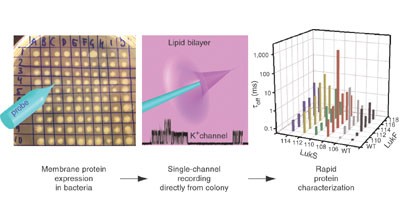
Because of their transmembrane nature, ion channels are notoriously difficult subjects for high-throughput screening approaches. A new method has been developed that provides a simple, elegant and rapid means for assaying channel function.

See also: Letter by Holden et al.


Chemical knockout of C-reactive protein in cardiovascular disease pp300 - 301

Jay W Heinecke

doi:10.1038/nchembio0606-300

Human C-reactive protein (CRP) has been implicated in the inflammatory responses associated with heart attacks and strokes. A small-molecule inhibitor of CRP limits myocardial infarction in rats and should facilitate mechanistic studies of cardiovascular disease.


Research Highlights p303

doi:10.1038/nchembio0606-303


Top

Brief Communication

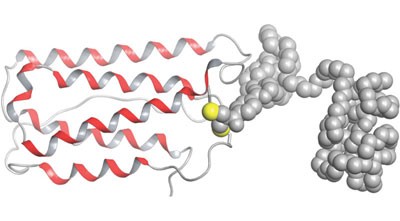
Site-specific PEGylation of native disulfide bonds in therapeutic proteins pp312 - 313

Sunil Shaunak, Antony Godwin, Ji-Won Choi, Sibu Balan, Elisa Pedone, Damotharan Vijayarangam, Sibylle Heidelberger, Ian Teo, Mire Zloh & Steve Brocchini

doi:10.1038/nchembio786

no alt info

Top

Letters


Stochastic kinetics of intracellular huntingtin aggregate formation pp319 - 323

David W Colby, John P Cassady, Grace C Lin, Vernon M Ingram & K Dane Wittrup

doi:10.1038/nchembio792

no alt info


Top

Articles

Identifying off-target effects and hidden phenotypes of drugs in human cells pp329 - 337

Marnie L MacDonald, Jane Lamerdin, Stephen Owens, Brigitte H Keon, Graham K Bilter, Zhidi Shang, Zhengping Huang, Helen Yu, Jennifer Dias, Tomoe Minami, Stephen W Michnick & John K Westwick

doi:10.1038/nchembio790

no alt info


Top

Erratum

Erratum: Atomic resolution crystallography reveals how changes in pH shape the protein microenvironment p346

Artem Y Lyubimov, Paula I Lario, Ibrahim Moustafa & Alice Vrielink

doi:10.1038/nchembio0606-346a


Top

Corrigendum

Corrigendum: Elevated levels of oxidized cholesterol metabolites in Lewy body disease brains accelerate alpha-synuclein fibrilization p346

Daryl A Bosco, Douglas M Fowler, Qinghai Zhang, Jorge Nieva, Evan T Powers, Paul Wentworth, Jr, Richard A Lerner & Jeffery W Kelly

doi:10.1038/nchembio0606-346b


Top

Extra navigation

Subscribe to Nature Chemical Biology

Subscribe

Open Innovation Challenges