Thank you for visiting nature.com. You are using a browser version with limited support for CSS. To obtain
the best experience, we recommend you use a more up to date browser (or turn off compatibility mode in
Internet Explorer). In the meantime, to ensure continued support, we are displaying the site without styles
and JavaScript.
Establishing networks that tackle issues ranging from drug development bottlenecks to manufacturing standards has become a key part of Europe's strategy to improve its global competitiveness. Bethan Hughes investigates progress so far.
Specialty pharmaceuticals — drugs prescribed primarily by specialists rather than primary-care physicians — have become an increasingly important part of the global pharmaceutical landscape. Ma and colleagues analyse the key factors influencing the commercial success and failure for specialty pharmaceuticals.
Recent advances in genomic knowledge and associated technologies should help accelerate the development of genetic tests that can predict drug response and toxicity; however several challenges remain. Here, Weiss and colleagues discuss the factors that affect the development, performance and uptake of pharmacogenetic tests.
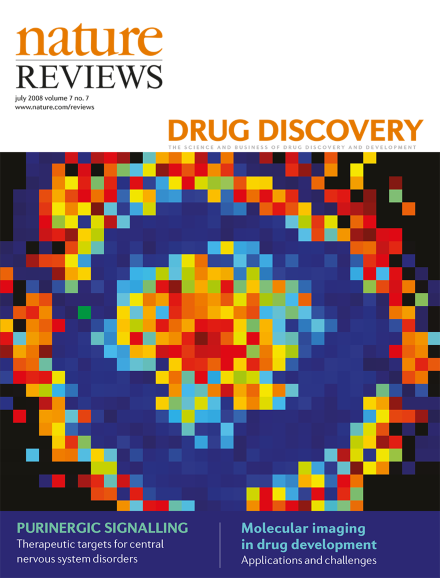
There is increasing interest in the role of purinergic signalling in CNS disorders, but few modulators have reached the clinic. Here, Burnstock provides an overview of the role of purinergic signalling in specific disorders, including brain trauma, ischaemia, neurodegenerative, neuroinflammatory and neuropsychiatric diseases, and highlights specific purinergic receptor subtypes that represent promising therapeutic targets.
Molecular imaging, which can allow the non-invasive monitoring of biological processes in living subjects, has the potential to enhance understanding of disease and drug activity in both preclinical and clinical drug studies, aiding effective translational research. Gambhir and colleagues review the applications of molecular imaging in drug development, and discuss challenges that need to be addressed to optimize its utility.
Natural products comprised of a macrocycle ring structure have proven their therapeutic applications as antibiotics, immunosuppressants as well as anticancer agents. Despite this, macrocyclic compounds remain under-explored. Terrett and colleagues review the properties and features of current macrocycle drugs, emphasizing the vast potential of synthetic macrocyles in drug discovery.