Thank you for visiting nature.com. You are using a browser version with limited support for CSS. To obtain
the best experience, we recommend you use a more up to date browser (or turn off compatibility mode in
Internet Explorer). In the meantime, to ensure continued support, we are displaying the site without styles
and JavaScript.
Pathological angiogenesis plays a role in a wide range of diseases. Folkman argues that viewing angiogenesis as an 'organizing principle' in biology can lead to novel insights into the molecular mechanisms of seemingly unrelated phenomena, and facilitate the development of new therapeutic approaches.
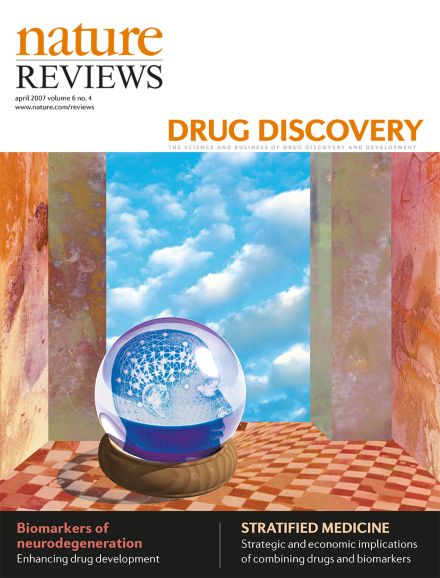
The potential to use clinical biomarkers to better match therapies with specific patient populations — stratified medicine — is anticipated to have a major effect on both clinical practice and the development of new drugs and diagnostics. Trusheim, Berndt and Douglas discuss the implications of this approach to future product development strategies and market structures.
Biomarkers to diagnose neurodegenerative disorders early in their course and to monitor responses of patients to therapeutic interventions are urgently needed to optimize the development and application of novel disease-modifying drugs. Trojanowski and colleagues discuss progress and key issues in the discovery and validation of such biomarkers, with a focus on Alzheimer's disease.
The process of autophagy has recently sparked great interest as it is recognized to be involved in a wide range of diseases. The prospect of its manipulation for therapeutic purposes has led to the discovery of many exciting new potential drug targets.
In this Review, Pettipher and colleagues discuss antagonism of DP1 and CRTH2 prostaglandin D2receptors as an approach to treat allergic diseases. They also review recent progress in the discovery and development of selective antagonists of these receptors.