Thank you for visiting nature.com. You are using a browser version with limited support for CSS. To obtain
the best experience, we recommend you use a more up to date browser (or turn off compatibility mode in
Internet Explorer). In the meantime, to ensure continued support, we are displaying the site without styles
and JavaScript.
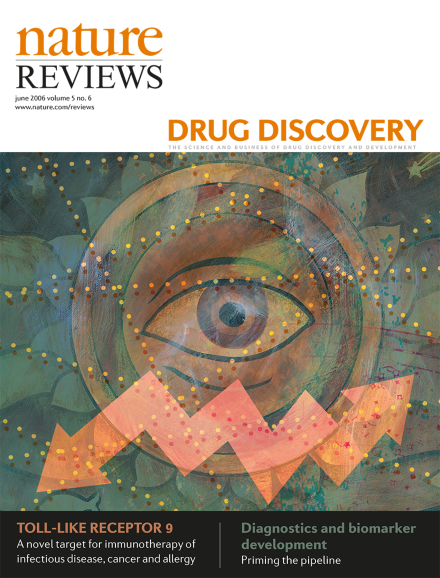
Advancement in personalized medicine depends on concurrent innovation in diagnostics and therapeutics. To remain competitive, drug discovery companies must embrace the powerful combination of genetic information in drug-responders and diagnostics that identify patient sub-groups.
The reasons for the shortage of new drugs coming through the pipeline are the subject of much debate, and the pipeline for diagnostics is one factor that will become increasing relevant to this problem as the co-development of drugs and diagnostics becomes more common. Phillips and colleagues examine the characteristics of the pipeline for diagnostics and biomarkers, and consider what steps could be taken to solve the problems identified.
The discovery of Toll-like receptors (TLRs) offers the possibility to treat diseases by stimulating immune functions in a targeted manner. Krieg reviews the potential of synthetic DNAs that activate TLR9 and are in clinical development in cancer, infectious disease and asthma/allergy.
The challenge of predicting potential efficacy of anti-atherosclerotic drugs before the completion of long-term trials with endpoints such as mortality has stimulated efforts to develop intermediate measures of efficacy. Nissen and colleagues describe how intravascular ultrasound can be applied to the serial assessment of atheroma burden in response to treatment, which has resulted in its emergence as a key technology in the evaluation and approval of novel drugs.
Resveratrol is the constituent of red wine that has an array of protective effectsin vitro and in animal models. Baur and Sinclair provide a comprehensive review of the in vivoevidence that suggests resveratrol has therapeutic potential in humans.
Target-oriented pharmacogenetic studies offer a unique opportunity to understand variations in response to highly selective protein therapeutics. Krejsa and colleagues review recent pharmacogenetic investigations of protein drugs, and present a case for initiating such studies during early clinical development.