Table of contents


Top

In This Issue

In This Issue pv

doi:10.1038/nchembio0106-v


Top

Commentary

The origins of chemical biology pp3 - 6

Kim L Morrison & Gregory A Weiss

doi:10.1038/nchembio0106-3

Chemical biology has historical roots that date back to the birth of chemistry and biology as distinct sciences.


Top

News and Views

Preventing protein secretion with chemical glue pp7 - 8

Brent R Stockwell

doi:10.1038/nchembio0106-7

A small-molecule inhibitor of protein secretion has been found that targets Cdc42, a regulator of the secretory pathway. This compound acts through a previously undescribed mechanism—by recruiting a protein inhibitor.

See also: Article by Pelish et al.


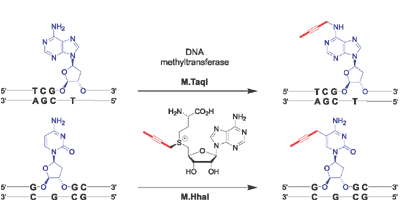
Chemical expansion of cofactor activity pp8 - 10

Andrew C Mercer & Michael D Burkart

doi:10.1038/nchembio0106-8

Methylation is a key regulatory event in several biological processes. The enzymatic transfer by methyltransferases of extended carbon chain analogs of S-adenosylmethionine to DNA opens up new avenues for investigating biological methylation.

See also: Brief Communication by Dalhoff et al.


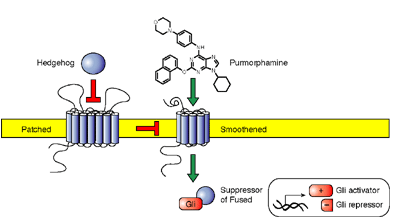
Agonizing Hedgehog pp10 - 11

James Briscoe

doi:10.1038/nchembio0106-10

Hedgehog signaling has important and pleiotropic roles in embryonic and adult tissues. A small-molecule agonist of this pathway has been shown to act by targeting the transmembrane protein Smoothened.

See also: Brief Communication by Sinha & Chen


Ion channels get flashy pp11 - 13

Hagan Bayley

doi:10.1038/nchembio0106-11

Ion channels have essential roles in the nervous system. An engineered ligand-gated channel with a photoactivated switch will be useful for addressing several issues in neuronal signaling.

See also: Article by Volgraf et al.


Opening the pore hinges on proline pp13 - 14

Amy H Andreotti

doi:10.1038/nchembio0106-13

Neurotransmitter binding to a member of the Cys-loop receptor superfamily elicits opening of an ion channel by inducing a change in the configuration of a prolyl imide bond. Engineering a series of mutant receptors to contain proline analogues with a range of cis/trans preferences demonstrates the molecular basis for channel gating.


Breaking and entering pp14 - 15

Tim Clackson

doi:10.1038/nchembio0106-14

A new small molecule inhibitor of TNF has an unexpected mechanism: it disrupts the trimeric structure of the protein.


Research Highlights p17

doi:10.1038/nchembio0106-17


Top

Letter

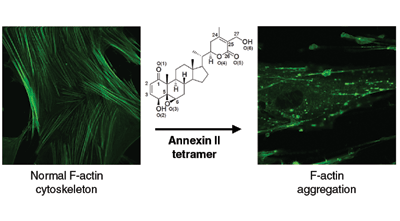
Actin microfilament aggregation induced by withaferin A is mediated by annexin II pp33 - 38

Ryan R Falsey, Marilyn T Marron, G M Kamal B Gunaherath, Nikhil Shirahatti, Daruka Mahadevan, A A Leslie Gunatilaka & Luke Whitesell

doi:10.1038/nchembio755

no alt info

Top

Articles

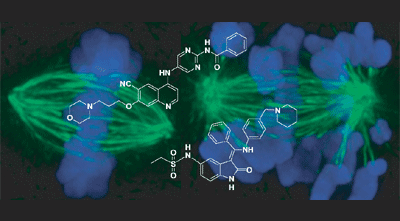
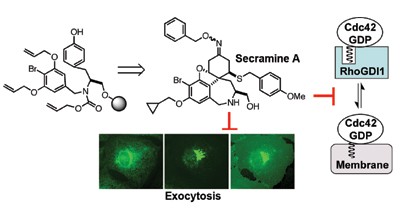
Secramine inhibits Cdc42-dependent functions in cells and Cdc42 activation in vitro pp39 - 46

Henry E Pelish, Jeffrey R Peterson, Susana B Salvarezza, Enrique Rodriguez-Boulan, Ji-Long Chen, Mark Stamnes, Eric Macia, Yan Feng, Matthew D Shair & Tomas Kirchhausen

doi:10.1038/nchembio751

no alt info

See also: News and Views by Stockwell


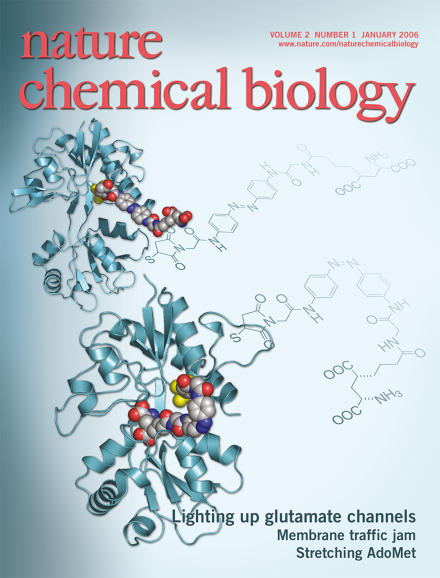
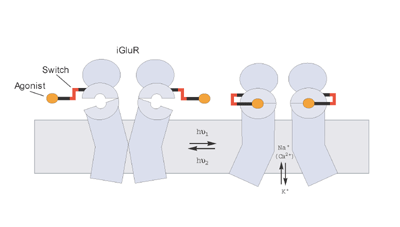
Allosteric control of an ionotropic glutamate receptor with an optical switch pp47 - 52

Matthew Volgraf, Pau Gorostiza, Rika Numano, Richard H Kramer, Ehud Y Isacoff & Dirk Trauner

doi:10.1038/nchembio756

no alt info

See also: News and Views by Bayley


Top

Extra navigation

Subscribe to Nature Chemical Biology

Subscribe

naturejobs

natureproducts