Table of contents


Top

Editorial

Beyond the printed page p168

doi:10.1038/nchem.218

The publication of scientific discoveries remained tied to ink and paper for over 300 years, but the rise of the internet over the past few decades has transformed scholarly communication. Just how far this revolution can go depends not just on publishers, but on authors and readers too.

Subject Category: General chemistry


Top

Thesis

Carbon-based curiosities pp170 - 171

Stuart Cantrill

doi:10.1038/nchem.219

Diamonds may be forever, but are some other forms of carbon merely passing fads? Stuart Cantrill considers why carbon often seems to be a chemist's best friend.

Subject Categories: General chemistry | Nanotechnology


Top

Research Highlights

Our choice from the recent literature pp172 - 173

doi:10.1038/nchem.220


Blogroll: Robot wars p173

doi:10.1038/nchem.221

Will robots take the drudgery out of lab work, and have you got a nose for isotopes?


Top

News and Views

Surface assembly: Graphene goes undercover pp175 - 176

E. Charles H. Sykes

doi:10.1038/nchem.224

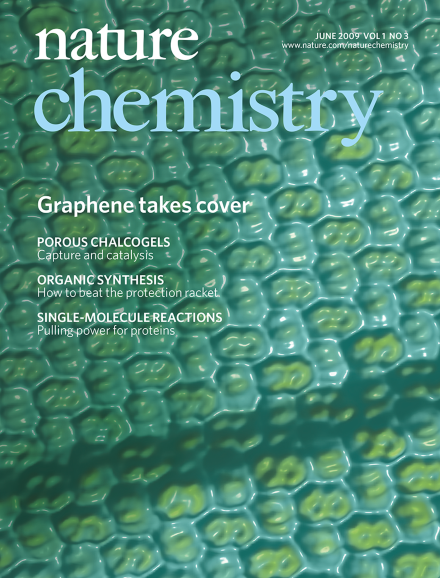
The formation of robust monolayers of organic molecules on graphene substrates not only sweeps this material's defects under a self-assembled carpet, but may help it achieve its full potential as a building block for molecular electronic devices.

Subject Categories: Supramolecular chemistry | Surface chemistry


NMR spectroscopy: Chemistry awakens a silent giant pp176 - 178

Lucio Frydman

doi:10.1038/nchem.227

Progress in NMR spectroscopy has been held back by sensitivity issues inherent to the way the measurements are taken. Now, two separate studies show how simple chemical processes can be used to unveil NMR's sensitive side

Subject Categories: Physical chemistry | Analytical chemistry


Macromolecular chemistry: Polymers kept in the loop pp178 - 179

Scott M. Grayson

doi:10.1038/nchem.226

Cyclic molecules have fascinated chemists for many years and researchers have now made nanoscale macromolecular 'doughnuts' that are large enough to be imaged with an atomic force microscope — providing direct visual proof of their cyclic topologies.

Subject Categories: Nanotechnology | Polymer chemistry


Single-molecule mechanics: Breaking bonds at a stretch pp180 - 181

Irmgard Frank & Florian Hofbauer

doi:10.1038/nchem.225

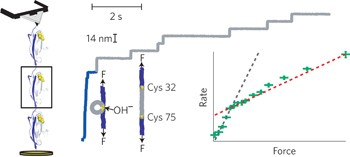
Stretching proteins strung together between the tip of an atomic force microscope and a surface results in mechanical tension that influences the rate at which disulfide bonds are cleaved under basic conditions, and reveals an unexpected switch in reactivity above a certain threshold force.

Subject Categories: Biochemistry | Physical chemistry


Fullerene analogues: Elusive icosahedral symmetry p181

Anne Pichon

doi:10.1038/nchem.222

Subject Category: Inorganic chemistry


Carbon nanotubes: Nanotubes reveal all in solution pp182 - 183

David I. Schuster & Jackson D. Megiatto, Jr

doi:10.1038/nchem.223

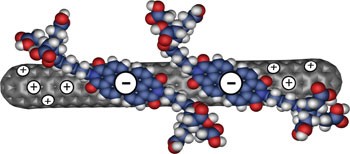
Enhancing the solubility of single-walled carbon nanotubes through non-covalent bonds has led to an improvement in our ability to probe and understand their interactions with electron donors and acceptors.

Subject Categories: Nanotechnology | Materials chemistry


Protein binding: Antibody surrogates click into place pp183 - 185

Thomas Kodadek

doi:10.1038/nchem.228

Using the protein of interest as a template, weakly binding ligands can be chemically linked to produce protein-binding agents that can compete with nature's own.

Subject Category: Chemical biology


Ruthenium catalysts: Splitting with a difference pp185 - 186

Leif Hammarström & Stenbjörn Styring

doi:10.1038/nchem.229

Exceptional catalysts will be required to produce hydrogen and oxygen from water. Copying multinuclear metal complexes in enzymes is promising, but not the only route. A mononuclear ruthenium complex has been developed that both makes hydrogen and forms oxygen–oxygen bonds through a mechanism different to those in nature.

Subject Categories: Inorganic chemistry | Catalysis


Top

Erratum

Table manners p186

Michelle Francl

doi:10.1038/nchem.245


Top

Perspective

The rise of fragment-based drug discovery pp187 - 192

Christopher W. Murray & David C. Rees

doi:10.1038/nchem.217

no alt info

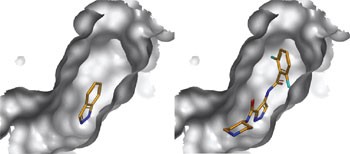
Fragment-based drug discovery is an approach that relies on the ability to identify weakly binding drug fragments using sophisticated screening techniques. Binding can be optimized while maintaining favourable physical properties of the drug, which should have a positive impact on the attrition rates of new drug candidates.

Subject Category: Medicinal chemistry


Top

Review

Protecting-group-free synthesis as an opportunity for invention pp193 - 205

Ian S. Young & Phil S. Baran

doi:10.1038/nchem.216

no alt info

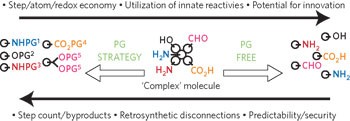
The use of protecting groups has been, and remains, instrumental in the development of organic synthesis. However, designing protecting-group-free strategies offers the challenge of developing useful new chemoselective processes as well as being inherently more step- and atom-economic.

Subject Categories: Organic chemistry | Synthesis


Top

Articles

Room-temperature molecular-resolution characterization of self-assembled organic monolayers on epitaxial graphene pp206 - 211

Qing Hua Wang & Mark C. Hersam

doi:10.1038/nchem.212

no alt info

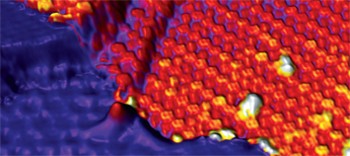
The unique physical properties of graphene make it a promising material for the construction of nanoelectronic devices. In order to tailor its surface properties and enable it to be integrated with other components, it has now been shown that stable and robust organic monolayers can be formed on graphene at room temperature.

Subject Categories: Physical chemistry | Supramolecular chemistry | Surface chemistry

See also: News and Views by Sykes


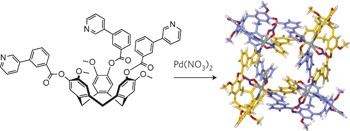
Stellated polyhedral assembly of a topologically complicated Pd4L4 'Solomon cube' pp212 - 216

Tanya K. Ronson, Julie Fisher, Lindsay P. Harding, Pierre J. Rizkallah, John E. Warren & Michaele J. Hardie

doi:10.1038/nchem.213

no alt info

A topologically non-trivial metallosupramolecular structure is formed by a Pd4L4 complex in which interweaving and twisting of the ligands results in both Solomon's Link and figure-of-eight ring motifs. In the solid state, six of these complexes assemble into a hollow spheroid that closely resembles a stellated truncated hexahedron.

Subject Categories: Inorganic chemistry | Supramolecular chemistry


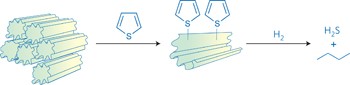
Spongy chalcogels of non-platinum metals act as effective hydrodesulfurization catalysts pp217 - 224

Santanu Bag, Amy F. Gaudette, Mark E. Bussell & Mercouri G. Kanatzidis

doi:10.1038/nchem.208

no alt info

Aerogels made from metal–sulfur networks show high absorption of conjugated organic molecules and mercury ions and can easily separate H2 from CO2. Compared with the conventional sulfided Co-Mo/Al2O3 catalyst, these spongy, random porous networks are twice as active towards the hydrodesulfurization of thiophene.

Subject Categories: Inorganic chemistry | Materials chemistry


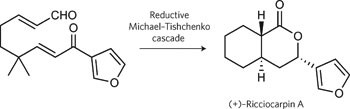
Concise synthesis of ricciocarpin A and discovery of a more potent analogue pp225 - 228

Anna Michrowska & Benjamin List

doi:10.1038/nchem.215

no alt info

An organocatalytic cascade reaction allows the rapid construction of (+)-ricciocarpin A, which exhibits potent molluscicidal activity against the water snails Biomphalaria glabrata. The concise synthesis also allowed the synthesis of five analogues, one of which was shown to have significantly improved biological activity.

Subject Categories: Catalysis | Organic chemistry


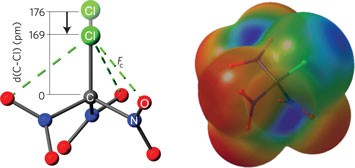
Chlorotrinitromethane and its exceptionally short carbon–chlorine bond pp229 - 235

Michael Göbel, Boris H. Tchitchanov, Jane S. Murray, Peter Politzer & Thomas M. Klapötke

doi:10.1038/nchem.179

no alt info

Deviations from the normal bonding behaviour add to our understanding of bonding models and inform computer simulations. Chlorotrinitromethane has an extremely short carbon–chlorine bond and its solid-state structure has now been determined. Using a combination of crystallography and computation, its intra- and intermolecular interactions have also been studied.

Subject Categories: General chemistry | Theoretical chemistry


Force-activated reactivity switch in a bimolecular chemical reaction pp236 - 242

Sergi Garcia-Manyes, Jian Liang, Robert Szoszkiewicz, Tzu-Ling Kuo & Julio M. Fernández

doi:10.1038/nchem.207

no alt info

Mechanical stretching of a protein can be studied in detail using single-molecule experiments, and is shown to have an accelerating effect on its reaction with a nucleophile. The observation of a dramatic switch in the effect above a threshold force suggests an abrupt change in protein conformation and a change in reaction mechanism.

Subject Categories: Biochemistry | Physical chemistry

See also: News and Views by Frank & Hofbauer


Manipulating single-wall carbon nanotubes by chemical doping and charge transfer with perylene dyes pp243 - 249

Christian Ehli, Christian Oelsner, Dirk M. Guldi, Aurelio Mateo-Alonso, Maurizio Prato, Cordula Schmidt, Claudia Backes, Frank Hauke & Andreas Hirsch

doi:10.1038/nchem.214

no alt info

Using carbon nanotubes in electronic or photovoltaic devices generates active metastable states. These elusive species are hard to characterize because of the polydisperse and aggregate nature of nanotube bundles. A complete characterization of the radical–ion pair state has now been achieved using a range of techniques.

Subject Categories: Nanotechnology | Materials chemistry

See also: News and Views by Schuster & Megiatto


Top

In Your Element

Xenon out of its shell p250

Ivan Dmochowski

doi:10.1038/nchem.230

Like all noble gases, xenon is colourless, odourless and inflammable — but it is also more reactive, and much rarer, than its lighter relatives. Ivan Dmochowski ponders how xenon, though initially slow to earn a spot in the periodic table, is now at the forefront of advances in science and technology.


Top

Extra navigation

Subscribe to Nature Chemistry

Subscribe

naturejobs

ADVERTISEMENT