Table of contents


Top

Editorial

Chemistry 2.0 p1

doi:10.1038/nchem.137

The continued rise of the internet and so-called 'Web 2.0' developments in particular, offer new opportunities for how chemical information can be stored and shared online — and could transform how the subject is taught and reported.

Subject Category: General chemistry


Top

Commentary

Chemistry goes global in the virtual world pp2 - 4

Jeffrey S. Moore & Philip A. Janowicz

doi:10.1038/nchem.138

Online courses administered by the University of Illinois at Urbana-Champaign show that it is possible to create an effective network of professors and students from across institutional and national borders all learning together — even in conceptually challenging subjects such as organic chemistry.

Subject Categories: General chemistry | Organic chemistry


Top

Features

The future of chemistry p5

doi:10.1038/nchem.139


Synthesizing our future pp5 - 6

Ryoji Noyori

doi:10.1038/nchem.143


Powering the planet with solar fuel p7

Harry B. Gray

doi:10.1038/nchem.141


Experiment and theory in harmony pp8 - 9

Mark A. Johnson

doi:10.1038/nchem.145


Interrogating biology with a chemical lexicon pp9 - 10

Barbara Imperiali

doi:10.1038/nchem.144


Weighing up the future of scientific tools pp10 - 11

Gary M. Hieftje

doi:10.1038/nchem.147


Chemistry goes green pp12 - 13

James H. Clark

doi:10.1038/nchem.146


Predicting a structured future pp13 - 14

Achim Müller

doi:10.1038/nchem.140


Thither supramolecular chemistry? pp14 - 15

J. Fraser Stoddart

doi:10.1038/nchem.142


Top

Thesis

Teetering towards chaos and complexity pp17 - 18

Bruce C. Gibb

doi:10.1038/nchem.148

The closest that most chemists get to the concepts of nonlinearity and emergent properties is a passing acquaintance with a well-known oscillating reaction. Bruce C. Gibb suggests that looking a little deeper into chaos and complexity could help us to answer some very important questions.

Subject Category: General chemistry


Top

Books and Arts

The legacy of Lewis p19

Stephen Davey reviews Cathedrals of Science: The Personalities and Rivalries That Made Modern Chemistry by Patrick Coffey

doi:10.1038/nchem.149


Top

Research Highlights

Our choice from the recent literature pp20 - 21

doi:10.1038/nchem.150


Blogroll: Stanford stand-off p21

doi:10.1038/nchem.151


Top

News and Views

Inorganic chemistry: How does your garden grow? pp22 - 23

Edwin Constable

doi:10.1038/nchem.155

Adding polyoxometallate crystals to a solution of organic cations leads to the controllable growth of hollow microtubes that may ultimately prove useful for applications ranging from microfluidics to medicine.

Subject Categories: Inorganic chemistry | Materials chemistry


Elemental allotropes: More on boron p23

Neil Withers

doi:10.1038/nchem.152

Subject Categories: Inorganic chemistry | General chemistry


Water dynamics: Ion-ing out the details pp24 - 25

Huib J. Bakker

doi:10.1038/nchem.154

The timescale on which the hydrogen bonds formed by a water molecule in a salt solution switch between ions and other water molecules is revealed for the first time.

Subject Categories: Physical chemistry | General chemistry


Supramolecular chemistry: A hydrophobic haven for base pairs pp25 - 26

Jim A. Thomas

doi:10.1038/nchem.135

Hydrogen-bonded dimers of one and two base-pair nucleotides can be stabilized inside the hydrophobic pocket provided by self-assembled molecular cages. The results could bring DNA-based computing a step closer to reality.

Subject Category: Supramolecular chemistry


Metal–organic frameworks: Improving pore performance pp26 - 27

Andrew I. Cooper & Matthew J. Rosseinsky

doi:10.1038/nchem.157

A drying procedure using supercritical carbon dioxide gives greater access to the pores of metal–organic frameworks, affording larger surface areas for applications.

Subject Categories: Supramolecular chemistry | Materials chemistry


Miniaturization: Chemistry at the crossroads pp28 - 29

Andrew J. deMello & Robert C. R. Wootton

doi:10.1038/nchem.156

The quest for miniaturization of chemical reactors is leading to a tangled web of reaction vessels, each formed at the junction of polymer nanofibres.

Subject Categories: Materials chemistry | Nanotechnology


Organometallic actinides: Now U=C it pp29 - 30

Polly L. Arnold

doi:10.1038/nchem.153

A terminal uranium–carbon multiple bond has long been sought-after in actinide chemistry. Now, a complex featuring a dianionic carbon atom as part of a multidentate ligand brings actinide carbenes a little nearer.

Subject Categories: Inorganic chemistry | Organometallic chemistry


Top

Perspective

The 'wired' universe of organic chemistry pp31 - 36

Bartosz A. Grzybowski, Kyle J. M. Bishop, Bartlomiej Kowalczyk & Christopher E. Wilmer

doi:10.1038/nchem.136

no alt info

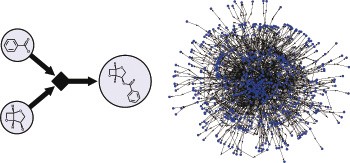
The vast number of known organic compounds and the reactions that connect them together can be thought of as a complex network. Analysing the organic chemistry universe in this manner may prove useful for both fundamental and practical purposes, such as predicting chemical reactivity or improving how regulated substances are monitored.

Subject Categories: General chemistry | Organic chemistry


Top

Review

Towards the computational design of solid catalysts pp37 - 46

J. K. Nørskov, T. Bligaard, J. Rossmeisl & C. H. Christensen

doi:10.1038/nchem.121

no alt info

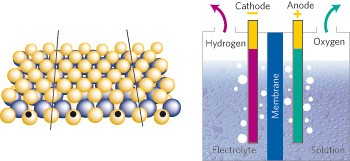
Advances in computational methods have enabled the trends in reactivity for transition metal and alloy catalysts to be described theoretically. This review discusses some of the first examples of how such knowledge can be used to design solid catalysts.

Subject Categories: Catalysis | Theoretical chemistry | Physical chemistry


Top

Articles

Spontaneous assembly and real-time growth of micrometre-scale tubular structures from polyoxometalate-based inorganic solids pp47 - 52

Chris Ritchie, Geoffrey J. T. Cooper, Yu-Fei Song, Carsten Streb, Huabing Yin, Alexis D. C. Parenty, Donald A. MacLaren & Leroy Cronin

doi:10.1038/nchem.113

no alt info

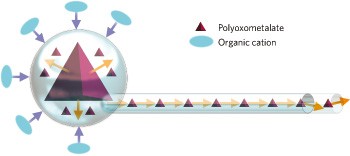
Adding low concentrations of aromatic organic cations to an aqueous solution in which polyoxometalate-based crystals are immersed leads to the spontaneous growth of tubular structures with controllable diameters. Tubes can be fused together to form junctions and are shown to act as channels through which liquids can flow.

Subject Categories: Inorganic chemistry | Materials chemistry

See also: News and Views by Constable


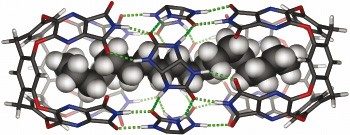
Minimal nucleotide duplex formation in water through enclathration in self-assembled hosts pp53 - 56

Tomohisa Sawada, Michito Yoshizawa, Sota Sato & Makoto Fujita

doi:10.1038/nchem.100

no alt info

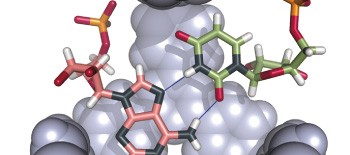
Short nucleotides with just one or two bases do not generally form stable hydrogen-bonded pairs in water. Now, however, it has been shown that the hydrophobic interior of water-soluble coordination cages offers a sheltered environment in which stable duplexes can be formed.

Subject Category: Supramolecular chemistry

See also: News and Views by Thomas


Catalytic behaviour of dense hot water pp57 - 62

Christine J. Wu, Laurence E. Fried, Lin H. Yang, Nir Goldman & Sorin Bastea

doi:10.1038/nchem.130

no alt info

Water can behave in unexpected ways at high pressure and temperature. Simulations of the detonation of a high explosive show that 'extreme' water can act as a chemical catalyst that promotes the transport of oxygen between reactive sites — contrary to the current view of water as a stable final product.

Subject Categories: Catalysis | Physical chemistry | Theoretical chemistry


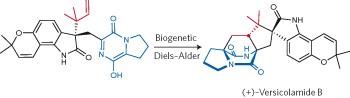
Asymmetric total syntheses of (+)- and (-)-versicolamide B and biosynthetic implications pp63 - 68

Kenneth A. Miller, Sachiko Tsukamoto & Robert M. Williams

doi:10.1038/nchem.110

no alt info

Two closely related species of fungus each produce one enantiomer of the same natural product. The biomimetic synthesis of both enantiomers reported here supports the unusual conclusion that the two species have evolved to produce a pair of enantiomerically distinct enzymes.

Subject Categories: Organic chemistry | Synthesis


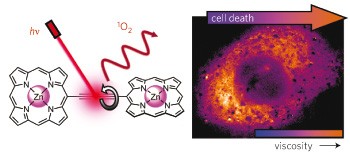
Imaging intracellular viscosity of a single cell during photoinduced cell death pp69 - 73

Marina K. Kuimova, Stanley W. Botchway, Anthony W. Parker, Milan Balaz, Hazel A. Collins, Harry L. Anderson, Klaus Suhling & Peter R. Ogilby

doi:10.1038/nchem.120

no alt info

The spectrally resolved fluorescence of a zinc–porphyrin dimer is used to quantify intracellular viscosity. The porphyrin dimer also acts as a singlet-oxygen sensitizer, and enables real-time observation of a surprisingly large increase in intracellular viscosity that occurs on singlet-oxygen-mediated photoinduced cell death.

Subject Categories: Analytical chemistry | Chemical biology | Photochemistry


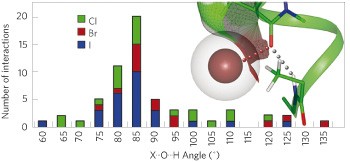
Halogen bonds as orthogonal molecular interactions to hydrogen bonds pp74 - 79

Andrea Regier Voth, Patricia Khuu, Keita Oishi & P. Shing Ho

doi:10.1038/nchem.112

no alt info

A survey of protein–ligand complexes shows that hydrogen bonds and halogen bonds that share a common oxygen-atom acceptor are often geometrically perpendicular to one another. Moreover, theoretical studies on small-molecule models of such systems predict that these two interactions are energetically independent.

Subject Categories: Biochemistry | Supramolecular chemistry | Theoretical chemistry


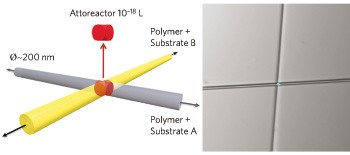
Polymer nanofibre junctions of attolitre volume serve as zeptomole-scale chemical reactors pp80 - 86

Pavel Anzenbacher, Jr & Manuel A. Palacios

doi:10.1038/nchem.125

no alt info

Performing chemical reactions on ultra-small scales is important in a number of disciplines. Now, it has been shown that a junction formed by fusing two polymer nanowires preloaded with reactants provides an effective attolitre-volume in which reactions can be conducted on a zeptomole (10-21 mol) scale.

Subject Categories: Materials chemistry | Nanotechnology

See also: News and Views by deMello & Wootton


Compressed alkanes in reversible encapsulation complexes pp87 - 90

Dariush Ajami & Julius Rebek, Jr

doi:10.1038/nchem.111

no alt info

Molecules confined to small volumes can contort themselves into unusual conformations that differ from those usually observed when no constraints are placed on them. It is now shown that when normal alkanes are encapsulated inside self-assembled capsules, they adopt a coiled conformation and exert pressure inside their hosts.

Subject Category: Supramolecular chemistry


Top

In Your Element

Bonding with boron p92

Ken Wade

doi:10.1038/nchem.158

Long ago, a global search for borane superfuels led fortuitously to the discovery of carboranes. Ken Wade recalls his own undistinguished part in the space race, and notes how carboranes revitalized boron hydride chemistry and modified our ideas of chemical bonding.


Top

Extra navigation

Subscribe to Nature Chemistry

Subscribe

naturejobs

ADVERTISEMENT