Thank you for visiting nature.com. You are using a browser version with limited support for CSS. To obtain
the best experience, we recommend you use a more up to date browser (or turn off compatibility mode in
Internet Explorer). In the meantime, to ensure continued support, we are displaying the site without styles
and JavaScript.
Purinergic signalling is one of the most pervasive mechanisms of intercellular communication in the nervous system. Fields and Burnstock review the history and recent development of neuron–glia signalling and the important role of extracellular ATP in these interactions.
The brain can be rendered more tolerant to injury by prior exposure to certain non-injurious stimuli. Gidday describes the adaptations that occur at multiple levels in response to preconditioning stimuli, which lead to the establishment of an ischaemia-tolerant phenotype.
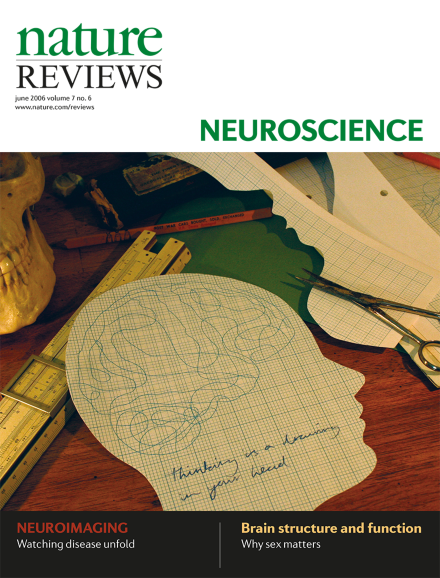
Misgeld and Kerschensteiner review howin vivooptical imaging techniques can be used to study the aetiology and therapeutics of neurological disorders. They discuss the challenges of integrating real-time observations with the molecular mechanisms and clinical manifestation of neurological diseases.
Recent work has shed light on how goal-directed actions are transformed into habitual responses. Yin and Knowlton outline a framework for our understanding of habit formation based on behavioural studies and the anatomy and physiology of the basal ganglia circuitry.
Male–female differences can be seen in brain anatomy, chemistry and function. Cahill reviews the latest findings on sex-related influences on the brain and discusses the importance of recognizing these differences, particularly in the context of disease states.
Uchida and colleagues consider integration of information for perceptual decision making, focusing on olfactory and visual systems. They argue that there are neural mechanisms that construct discrete sensory samples from a continuous input stream to facilitate important computational functions.
Psychiatric symptoms are frequently observed in patients with Alzheimer's disease or other dementias. Ballard and Howard discuss the current knowledge, and present an analysis of the efficacy of neuroleptic drugs in treating these symptoms and their adverse effects.