Thank you for visiting nature.com. You are using a browser version with limited support for CSS. To obtain
the best experience, we recommend you use a more up to date browser (or turn off compatibility mode in
Internet Explorer). In the meantime, to ensure continued support, we are displaying the site without styles
and JavaScript.
Cells have evolved complex mechanisms to control overall protein synthesis and the translation of specific mRNAs. At the heart of this process is the mammalian target of rapamycin (mTOR) signalling pathway, which senses and responds to nutrient availability, energy sufficiency, stress, hormones and mitogens to modulate protein synthesis.
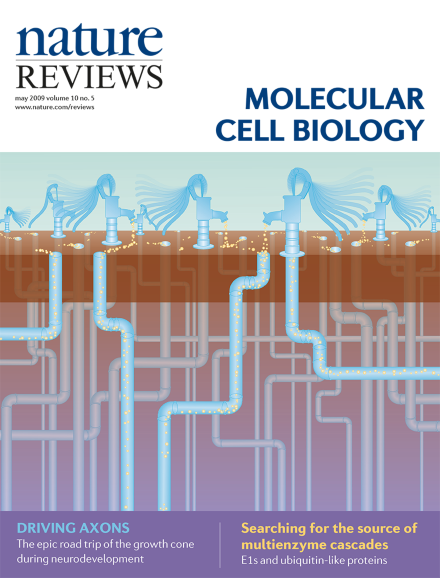
The attachment of ubiquitin-like proteins (UBLs) to proteins is a central mechanism of modulation of protein function. Enzymatic, structural and genetic studies have elucidated how mechanistically and structurally related E1 enzymes activate UBLs and selectively direct them to downstream pathways.
The journey of the growth cone is similar to a vehicle on a road. Cytoskeletal elements form the 'motor' to move forward and provide traction on the road, whereas a 'navigator' system guides the vehicle to translate environmental signals into directional movement.
Ions move across cell membranes through either ion channels or ion pumps. Recently, atomic-resolution structures and high-resolution functional measurements of examples from both channels and pumps have begun to suggest that these molecules need not be as different as was once thought.
The uropod, a protrusion at the rear of amoeboid motile cells such as leukocytes, exemplifies the importance of morphology in cell motility. Although the signalling and structural requirements of uropod formation are being characterized, a clear understanding of uropod function is still lacking.
Coat proteins, such as coat protein I (COPI), couple vesicle formation with cargo sorting to ensure the generation of correctly packaged transport vesicles. Emerging evidence suggests that some long-held views on how COPI vesicles are formed need to be revised.